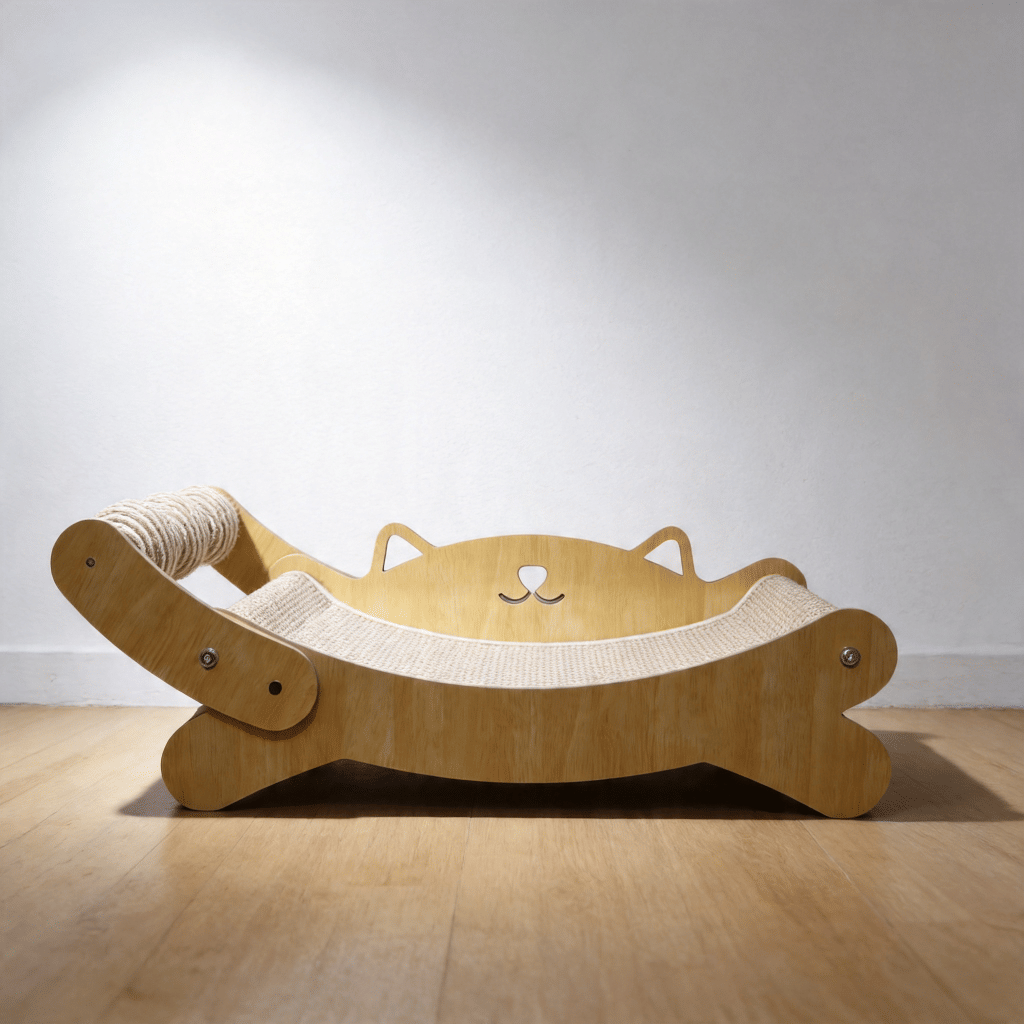
Indoor cats require dedicated outlets for instinctual scratching behaviors to maintain claw health and mental enrichment. Without proper infrastructure, the default alternative is often your expensive upholstery and living room furniture. The current market is saturated with lightweight, aesthetically pleasing but functionally deficient scratchers. High failure rates—driven by tipping, structural breakage under heavy loads, rapid material degradation, and poor ergonomic design—lead to wasted spend and unresolved destructive scratching habits. Selecting the right scratching infrastructure requires moving beyond basic aesthetics. You must evaluate material science, structural stability, and feline biomechanics to find a lasting solution. This guide provides a technical framework for evaluating and selecting the most effective cat scratchers for indoor cats. We will cover everything from material durability to strategic placement, ensuring you can protect your home while supporting your pet's natural instincts.
Key Takeaways
Stability and Core Strength are Non-Negotiable: A scratcher must support the full weight and pull-force of an adult cat without wobbling or snapping. Instability and weak internal cores are the primary reasons cats abandon scratchers for furniture.
Material Dictates Engagement: Sisal fabric, heavy-duty sisal rope, and corrugated cardboard offer the optimal resistance for shedding nail sheaths, outperforming standard residential carpet.
Ergonomics Over Aesthetics: Vertical posts must allow for full bodily extension (minimum 33 inches for large breeds), while horizontal scratchers and mats must be wide enough to accommodate the cat's resting body mass.
Strategic Placement Drives Adoption: Even the highest-quality scratcher will fail if placed in low-traffic, hidden areas rather than adjacent to the furniture the cat already targets.
Defining Success Criteria: The Biomechanics of Feline Scratching
The Anatomical Purpose of Scratching
Scratching is a biological necessity driven by feline anatomy. A cat's claws grow in layers, similar to an onion. As the inner layers grow, the outer keratin sheath dies and becomes a dull husk. Cats scratch rough surfaces to hook these dead sheaths and pull them off. If they fail to shed these layers, the claws can curve inward and grow directly into the paw pad, requiring surgical veterinary intervention. The physical act of scratching also engages the entire upper body. It provides a deep stretch for the latissimus dorsi, the shoulders, and the forelimbs, maintaining the flexibility required for jumping and climbing. Finally, scratching serves as a territorial marking mechanism. Cats have interdigital glands located between their toes that release specific pheromones. When they drag their claws down a surface, they leave both a visual mark of shredded material and an olfactory scent mark, signaling ownership of the space to other animals.
The "Heavy Cat" Problem (Tipping vs. Breaking)
Large breeds like Maine Coons, Savannah cats, and heavy domestic shorthairs exert massive downward and outward pull-force. When a 15-pound cat stretches up a 35-inch post and pulls backward, it creates a massive lever arm. Standard commercial posts routinely fail under this leverage. You must evaluate the base-weight-to-post-height ratio. A tall post requires a wide, heavily weighted base to prevent tipping. A 35-inch post needs at least a 16-by-16-inch base made of dense, heavy wood. If a post tips over and falls on a cat, that cat will likely never use it again. The internal core material is the next major failure point. Manufacturers often use hollow cardboard tubes to save on shipping weight. A heavy cat will snap a hollow tube right at the base connection point. Solid wood cores or thick-walled, high-density PVC reinforced with internal steel brackets provide the necessary rigidity to withstand years of aggressive use.
Vertical vs. Horizontal Preferences
Cats exhibit distinct directional preferences based on their individual physiology and habits. You have to observe your cat to know what they need. Some cats walk up to a door frame, stretch as high as they can, and pull down. These are vertical stretchers. They require tall posts or wall-mounted boards. Other cats walk onto an area rug, dig their front claws in, and pull their body backward while keeping their rear end low to the ground. These are horizontal pullers. They require floor mats or low-profile boards. If you buy a tall post for a horizontal puller, it will sit unused. If you buy a flat mat for a vertical stretcher, they will ignore it and destroy your couch arms instead. Map your house and look at where the current damage is located. The location and direction of the damage tell you exactly what form factor you need to buy.
Evaluating Material Durability and Claw Health Outcomes
Sisal Rope vs. Woven Sisal Fabric
Sisal is the gold standard for scratching surfaces. Derived from the Agave sisalana plant, the fibers are incredibly tough and provide the exact resistance a cat needs to shed a nail sheath. However, the manufacturing format matters immensely. Twisted sisal rope is common and works well initially, allowing the cat to dig deep into the gaps between the ropes. But twisted rope has a fatal flaw. When a cat's sharp claw slices through a single strand of the rope, the tension is lost. The rope begins to unspool and sag down the post, rendering it useless. Woven sisal fabric solves this problem entirely. Manufactured on a loom, it creates a tight, interlocking grid of fibers often backed with latex for extra durability. When a cat scratches woven fabric, their claws slide smoothly downward, reducing the risk of a claw getting snagged or twisted. If a fiber breaks in a woven fabric, the surrounding weave holds it in place. It does not unravel, meaning woven fabric lasts significantly longer under heavy use.
The Role of the Corrugated Cardboard Cat Scratcher
Cardboard is highly effective, provided you understand its lifespan and grading. A high-quality corrugated cardboard cat scratcher mimics the texture and acoustic feedback of tree bark. When a cat sinks its claws into the paper flutes and pulls, it creates a satisfying ripping sound. This auditory feedback drives high engagement and provides vital mental enrichment. The key to cardboard is density, which is graded by flute size. Wide flutes, such as A-flute, crush easily and shred into a mess within days. Tight flutes, such as B-flute or C-flute, are packed densely together and offer much higher resistance. They hold their shape and can last for months, even in multi-cat households. While cardboard does create paper debris that you will have to sweep up, the behavioral benefits and the protection it offers your furniture make it a necessary tool.
The Surface Variety Debate (Wood, Carpet, and Upholstery)
Some behaviorists suggest giving cats a variety of textures, including carpet and upholstery remnants. This is a dangerous game. Cats are pattern-recognition animals. If you give them a scratching post covered in residential carpet, you are teaching them that carpet is an acceptable target. They do not distinguish between the carpet on the post and the carpet on your stairs. The textures match, so the behavior generalizes. The same applies to upholstery. If you want to protect your home, you must create a clear textural boundary. Approved scratching surfaces should feel completely different from your furniture and floors. Stick to sisal, heavy corrugated paper, or bare, untreated wood to maintain clear boundaries between approved scratching zones and human furniture.
Material Type
Resistance Level
Shred Profile
Best Use Case
Woven Sisal Fabric
Very High
Minimal fraying, does not unspool
Heavy-duty vertical posts for large breeds
Twisted Sisal Rope
High
Unspools rapidly if a strand is cut
Standard vertical posts for average cats
High-Density Cardboard (B/C Flute)
Medium
Creates paper debris over time
Horizontal lounges and floor pads
Residential Carpet
Low
Snags claws, pulls fibers out easily
Not recommended (causes behavioral confusion)
Form Factors: Matching Architecture to Feline Preferences
Vertical Towers and Posts
Height is the most critical dimension for a vertical post. A cat needs to achieve full spinal extension. If the post is too short, the cat has to crouch to scratch, which is uncomfortable and fails to stretch the latissimus dorsi. For an average domestic cat, 30 inches is the absolute minimum. For large breeds, you need 35 to 40 inches. Look closely at the hardware connecting the post to the base. Avoid products assembled with industrial staples or plastic friction-fit pegs. These will loosen over time, creating a wobbly post. You want heavy-duty 3/8-inch steel bolts threading into metal inserts embedded directly in the wood core. This creates a rigid, unyielding connection. If the post features a top platform, ensure the center of gravity remains low enough to prevent the unit from toppling when the cat jumps off.
Horizontal Solutions: The Cat Scratching Pad and Floor Mats
Horizontal solutions are highly versatile and serve specific use cases. A flat cat scratching pad is essential for senior cats. As cats age, osteoarthritis often sets in, particularly in the hips and lower spine. Reaching up and pulling down on a vertical post becomes painful. A floor-level pad allows them to maintain their claw health without stressing their joints. Low-profile mats are also excellent training tools. If your cat is tearing up a specific spot on your living room rug, place a scratching mat directly over that exact spot. Secure it with double-sided tape if necessary. Once the cat starts using the mat instead of the rug, you can slowly move the mat an inch a day toward a more appropriate location.
Multi-Functional Designs: Cat Scratcher Bed and Cat Scratching Lounge
Cats love to sleep in areas they have claimed as their territory. Combining a resting space with a scratching surface is highly effective. A cat scratcher bed provides a secure, elevated spot for a cat to sleep. When they wake up, their natural instinct is to stretch and scratch immediately. Having the scratching surface right there guarantees usage. Furthermore, sleeping on the surface deposits scent from the glands on their cheeks and flanks, reinforcing their territorial claim. A contoured cat scratching lounge operates on the same principle. The gentle curves support the cat's spine during rest, while the dense cardboard provides a heavy-duty horizontal scratching surface. These multi-functional pieces maximize floor space and provide excellent mental enrichment.
Commercial & High-Volume Sourcing: Retailers, Rescues, and Breeders
Identifying a Reliable Cat Scratcher Manufacturer
When outfitting a multi-cat environment like a rescue shelter or a breeding facility, equipment failure is not an option. You need to vet your suppliers carefully. When evaluating a cat scratcher manufacturer, start by asking about their adhesives. Cats groom their paws meticulously after scratching. If the manufacturer uses cheap, toxic glues to bind the sisal or cardboard, the cats will ingest those toxins. Demand water-based, pet-safe adhesives. Next, look for modularity. In a commercial setting, the scratching surfaces will get destroyed quickly. If you have to throw away the entire unit every time the sisal frays, your replacement costs will skyrocket. Look for designs where you can unbolt and replace just the damaged column or the cardboard insert while keeping the heavy wooden base intact.
Evaluating Wholesale Cat Scratchers for Quality Control
Buying in bulk requires strict quality assurance protocols. Do not commit to a massive order without testing a sample batch first. When you receive your sample wholesale cat scratchers, put them through a rigorous physical stress test to ensure they meet commercial standards.
Check the base plates for warping using a flat edge. If the wood is not properly dried at the factory, it will warp in transit, resulting in a wobbly post.
Test the core strength by laying the post on its side and applying heavy downward pressure to the middle of the column. It should not bow, crack, or flex.
Inspect the sisal wrapping by trying to pull the fibers apart with your fingers. If you can easily expose the core beneath, the wrapping is too loose and will fail quickly under feline claws.
Evaluate the cardboard density by pressing your thumb hard into the flutes. If the paper crushes easily under moderate pressure, reject the batch.
Implementation Risks and Adoption Troubleshooting
Location Strategy
The biggest mistake owners make is hiding the scratching post. They buy an ugly post and stick it in the basement, the laundry room, or a back corner. The cat will never use it. Scratching is a territorial display. Cats want their scent and visual marks to be in highly trafficked, socially significant areas. They want you and any other pets to see their work. You must place the scratcher adjacent to the furniture they already target, next to their favorite sleeping spots, or near high-traffic doorways. If they are destroying the right arm of your sofa, the new scratching post must go exactly one inch away from the right arm of your sofa. Visibility and prominence are non-negotiable for adoption.
The Transition Phase
You cannot just unbox a new post, set it down, and expect the cat to understand what to do. You have to actively integrate it into their routine. Start with olfactory attractants. Rub high-quality catnip or silvervine powder directly into the sisal fibers or the cardboard flutes. This draws the cat to the object. Next, use interactive play. Take a wand toy with a feather and drag it up the side of the post. When the cat pounces on the feather, their claws will sink into the sisal. They will immediately realize how good the material feels. When they scratch it on their own, reward them instantly with a high-value treat. Build a positive association and make the scratcher a central hub for play.
Deterrence Tactics
While you are making the new scratcher highly attractive, you must simultaneously make the old target highly unattractive. This requires temporary deterrence tactics. Apply double-sided sticky tape to the arms of the couch. Cats despise the feeling of sticky adhesive on their paw pads. Alternatively, wrap the targeted furniture legs in aluminum foil. The metallic sound and smooth texture offer zero resistance and feel terrible on their claws. You can also use citrus-scented sprays on the upholstery, as cats naturally avoid citrus odors. The combination of a highly rewarding new scratcher and a highly unpleasant old target will force a behavioral shift. Once the cat is consistently using the new equipment for several weeks, you can slowly remove the tape and foil.
Conclusion
Audit your home's current scratching damage to determine if your cat requires vertical posts or horizontal pads.
Dispose of any unstable, broken, or ignored scratching equipment that currently clutters your living space.
Purchase one tall, heavy-based sisal post and one dense cardboard option to accurately test your cat's material preferences.
Place the new scratching equipment directly adjacent to the furniture your cat currently targets, ensuring it is in a high-traffic area.
Apply double-sided tape or aluminum foil to previously damaged furniture to deter further scratching during the transition phase.
FAQ
Q: How tall should a scratching post be for an average indoor cat vs. a large breed?
A: An average indoor cat requires a vertical post at least 30 inches tall to achieve full spinal extension. Large breeds, such as Maine Coons or Savannah cats, need posts that are a minimum of 35 to 40 inches tall. The post must allow the cat to stretch their body completely upward without the top of the post limiting their reach.
Q: Why does my heavy cat keep breaking or tipping over standard scratching posts?
A: Standard commercial posts often use hollow cardboard tubes for the core and lightweight particleboard for the base. Heavy cats exert massive downward and outward leverage when pulling. This force easily snaps hollow cores and tips bases that lack sufficient weight. Upgrading to solid wood cores and wider, heavier base plates solves this structural failure.
Q: Why does my cat continue to scratch the couch instead of the new scratching post?
A: Cats ignore new posts placed in hidden, low-traffic areas. They scratch to leave visible and scent markers in socially significant spaces. Move the new post directly next to the targeted couch. Ensure the post is highly stable and tall enough, as any wobbling will drive them back to the sturdy, unmoving couch.
Q: How often should I replace a corrugated cardboard cat scratcher?
A: Replacement frequency depends entirely on the cardboard density and the number of cats using it. High-density, tight-flute cardboard can last six months to a year under normal use. Lower-quality, wide-flute cardboard may shred completely within a few weeks. Replace the unit once the surface is entirely flattened and no longer provides resistance for the claws.
Q: Is a flat cat scratching pad or mat better than a vertical post for senior cats?
A: Yes, horizontal pads or low-angle mats are significantly better for senior cats. Osteoarthritis and joint degradation make reaching up and pulling down on a vertical post painful. Flat pads allow them to maintain their scratching instincts and shed dead nail sheaths without putting undue stress on their spine, hips, and hind legs.
Q: Are carpeted cat scratchers bad for training indoor cats?
A: Carpeted scratchers can severely confuse cats if the material is too similar to your home's actual flooring. If a cat learns that scratching a carpeted post is acceptable, they will likely generalize that behavior to your living room rug or carpeted stairs. Use texturally distinct materials like sisal or cardboard to establish clear boundaries.
ABOUT US
We are a manufacturer specializing in eco-friendly packaging , pet supplies and home solutions, with 20 years of R&D and production experience in pet supplies. Now we have decided to go global, making our products accessible to everyone in every corner of the world.