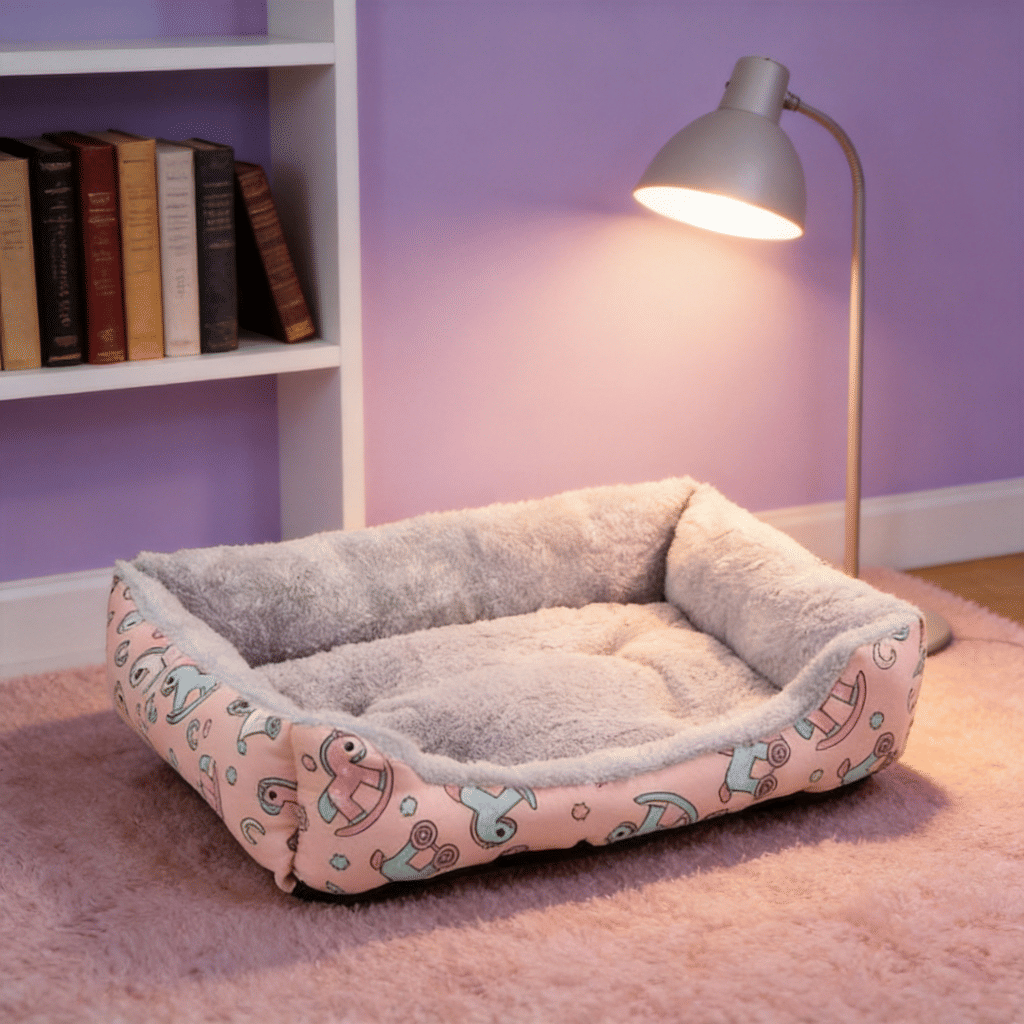
High return rates and stagnant inventory in pet retail frequently stem from a single, preventable metric: improper bed sizing. Retail buyers often select inventory based on aesthetic appeal or external footprint, neglecting the biomechanical realities of feline sleep styles, weight distribution, body composition, and breed variances. This oversight leads to customer dissatisfaction when beds fail to accommodate their pets. A bed that looks perfectly proportioned on a store shelf may prove entirely non-functional once placed in a living room, resulting in an immediate return. To optimize shelf space and maximize sell-through rates, retailers must adopt a technical evaluation framework for cat bed sizes. Aligning internal sleep area dimensions and entry heights with specific feline life stages, shapes, and consumer demands ensures you stock products that actually perform on the floor.
Internal vs. External Dimensions: A bed’s external footprint dictates retail shelf space and shipping costs, but the internal sleep area is the sole driver of end-user adoption and customer retention.
Sleep Style Dictates Shape and Size: Sizing cannot be evaluated in a vacuum; a cat's preference for curling versus stretching requires specific pairings of dimensions with round or rectangular designs.
Strategic Inventory Ratios: Profitability relies on a weighted inventory mix, heavily favoring medium sizes for average adult cats while maintaining strategic stock of specialized sizes for kittens and large breeds.
Supplier Evaluation: Sourcing wholesale pet beds requires auditing manufacturers for dimensional consistency, material compression rates, and accurate labeling to prevent consumer sizing errors.
Framing the Problem: Why Accurate Cat Bed Sizes Matter for Retailers
The financial impact of misaligned sizing extends far beyond a simple product return. When a consumer purchases a pet bed that fails to fit their animal, the retailer incurs the immediate cost of processing the return and the potential loss of the physical product if it accumulates pet hair or dander. Returned pet products are notoriously difficult to resell as new. Inaccurate sizing directly inflates inventory shrink and degrades overall category profitability. Every inch of shelf space dedicated to an improperly sized bed represents a missed revenue opportunity.
A pervasive issue driving these returns is the common consumer misconception that larger is always better. This size-up fallacy directly conflicts with feline thermoregulation and body composition realities. Cats have a higher basal body temperature than humans. They actively seek out enclosed, snug environments that reflect their own body heat. If a bed is too large, the excess ambient air gap causes rapid heat loss, prompting the cat to abandon the bed entirely. Consumers often blame the product quality rather than their own sizing error, leading to negative online reviews that damage brand reputation.
Weight alone is a deeply flawed metric for sizing. A 12-pound chunky cat requires a wide internal diameter to accommodate its girth. A 12-pound long, lean cat requires extended linear space to stretch. Relying solely on weight charts without considering body composition leads to inevitable sizing failures. Retailers must shift the consumer mindset from weight-based purchasing to dimension-based purchasing.
Retail buyers must establish strict metrics for a successful pet bed SKU. A high-performing product demonstrates a low return rate, high structural durability, accurate packaging dimensions, and clear consumer sizing guidelines. Packaging must explicitly differentiate between the external footprint and the internal sleeping capacity. When consumers are educated at the point of sale regarding how a bed will actually fit their specific animal, purchase confidence rises.
Measure the internal sleep surface independently from the external bolster footprint to verify usable space.
Verify the density of the base foam to ensure it supports the target weight class without bottoming out against the floor.
Check the packaging for clear, consumer-facing dimensions that highlight the internal sleeping area rather than just the shipping dimensions.
Assess the entry threshold height to ensure accessibility for the target feline demographic, particularly for senior or disabled pets.
Evaluate the fabric stretch coefficient, as highly elastic materials can distort the intended internal dimensions over time.
Technical Evaluation: Standard Sizing Categories and Feline Demographics
Sizing a Cat Bed for Kittens and Petite Breeds
Accommodating the smallest feline demographics requires precise dimensional control. A standard cat bed for kittens and petite breeds typically measures between 15 and 18 inches in external diameter. The internal sleep area is the critical factor, usually resting around 10 to 12 inches. This compact space provides the necessary physical boundaries to simulate the security of a litter. The snug fit ensures maximum heat retention for kittens that have not yet developed a full adult undercoat.
Beyond the diameter, the entry height is a non-negotiable specification. The bed must feature a low entry threshold, strictly under 3 inches, to allow safe, unobstructed access. Kittens lack the muscle mass and coordination to scale high bolsters safely. Forcing them to do so increases the risk of joint strain or avoidance of the bed altogether. This low-profile entry is equally critical for senior cats or petite breeds like the Singapura, who may suffer from restricted movement or arthritis.
From a retail perspective, this sizing category represents a high-turnover opportunity. Consumers frequently purchase these smaller beds as starter items and replace them as the pet matures. Maintaining a consistent stock of these entry-level sizes captures new pet owners and establishes brand loyalty early in the animal's life cycle. Retailers should position these smaller beds near kitten food and training supplies to encourage impulse cross-merchandising.
Medium Dimensions for the Average Adult Cat
The medium sizing tier is the undisputed core revenue driver for the pet bedding category. Designed to accommodate the standard domestic shorthair weighing between 8 and 12 pounds, these beds typically measure 19 to 22 inches in external diameter or length. The internal sleeping area generally spans 14 to 17 inches. This provides adequate space for an adult cat to curl up comfortably while still maintaining contact with the bed's inner walls for security and warmth.
Because this weight and size range encompasses the vast majority of household cats, medium beds should comprise approximately 60 to 70 percent of a retailer's overall bed inventory. Stocking too few medium beds in favor of extreme sizes will inevitably lead to stockouts and lost sales. The medium category must offer the widest variety of fabrics, colors, and structural designs, as this is where consumer demand is most concentrated.
When evaluating medium beds, buyers must pay close attention to the density of the filling. An adult cat exerts more concentrated pressure on the base cushion than a kitten. If the internal dimensions are correct but the base foam compresses too easily, the cat will essentially be sleeping on the hard floor. High-density base support is just as important as the correct internal diameter. Polyfill bases tend to separate over time, creating cold spots, whereas solid foam bases maintain their dimensional integrity.
Large and Multi-Cat Sizing
Large breeds such as Maine Coons, Ragdolls, and Savannah cats require significantly more space than standard domestic breeds. Beds in this category must measure 24 inches or more in diameter or length. A mature Maine Coon can easily exceed 35 inches in length from nose to tail when fully stretched. Forcing a large breed into a medium bed causes unnatural spinal curvature and joint discomfort. The animal will refuse to use the product, and the owner will return it.
This sizing tier is also heavily utilized by consumers with bonded pairs—multiple cats that prefer to sleep together. A 24-inch or larger bed provides the necessary surface area for two average-sized adult cats to co-sleep without overheating or crowding. The structural integrity of the bolsters in these larger beds must be robust. They will frequently bear the combined weight of two animals leaning against them simultaneously, requiring reinforced stitching and high-density bolster fill.
Large beds represent a lower sales volume compared to the medium category, but they command a significantly higher retail margin. They also consume a disproportionate amount of warehouse and shelf space. Retail buyers must carefully calculate the dimensional weight and storage costs associated with these larger SKUs to ensure the higher margins are not entirely consumed by logistical expenses. Strategic placement on lower shelves or endcaps maximizes visibility without blocking sightlines for smaller merchandise.
Solution Categories: Correlating Shape with Size and Sleep Style
The Round Cat Bed (Donuts and Bolsters)
The traditional round cat bed, often referred to as a donut or bolster bed, is engineered specifically for curlers. Cats that sleep in a tight, circular formation do so to conserve body heat and protect their vital organs. The raised bolsters of a round bed serve a dual purpose. They block ambient drafts and provide a structured resting place for the cat's chin and neck, mimicking the physical support of sleeping against another animal.
The critical sizing nuance with round beds is the deceptive nature of the bolsters. Thick, overstuffed outer walls significantly reduce the actual internal sleep area. A bed with a 20-inch external diameter might only offer a 12-inch internal sleeping surface. Retailers must ensure that packaging clearly states this inner diameter. If a consumer purchases a 20-inch round bed for a 15-inch long cat based solely on the external measurement, the bed will be too small.
Inventory managers should prioritize round beds with high-quality, shape-retaining fill. If the bolsters collapse under the cat's weight, the bed loses its heat-retention capabilities and its structural appeal. Testing the compression recovery rate of the bolsters during the sourcing phase ensures long-term product viability. Beds that arrive flat and fail to regain their circular shape on the retail floor will not sell.
The Rectangular Cat Bed (Loungers and Mats)
Not all cats prefer tight enclosures. Many felines are stretchers, preferring to sleep on their sides or backs with their limbs fully extended. For these animals, a rectangular cat bed, such as a lounger or a flat mat, is the only viable option. Rectangular designs eliminate the restrictive boundaries of a full circular bolster. This allows the cat to regulate its body temperature by exposing its belly to the air.
When evaluating rectangular beds, length is the single most critical metric. The internal length must accommodate the full extension of the cat from its nose to the base of its tail, plus an additional two to three inches of clearance for movement. Width is secondary but must still be sufficient to support the cat's torso without its spine hanging over the edge.
Rectangular beds often feature lower profiles or only partial bolsters on three sides. This open-concept design makes them highly versatile for retail shelves. They stack more efficiently than round donut beds. They are particularly popular in warmer climates or during summer months when heat retention is less of a priority for the animal. Retailers in southern regions should weight their inventory slightly heavier toward these open rectangular designs.
The Cat Sofa Bed (Orthopedic and Elevated)
As the feline population ages, the demand for structured, supportive sleeping arrangements increases. A cat sofa bed provides targeted joint support and a defined resting area. This makes it the preferred choice for senior cats or those suffering from osteoarthritis. These beds typically feature a solid, orthopedic foam base rather than loose polyfill. This ensures the cat's weight is distributed evenly across the surface, preventing pressure points on aging joints.
Sizing a sofa bed requires precise measurement of the flat sleeping cushion, explicitly excluding the armrests or backrests. Consumers often misjudge the size of sofa beds because the bulky backrest inflates the overall visual footprint. If the flat cushion is too narrow, the cat will be forced to sleep partially on the hard frame. This defeats the orthopedic purpose of the product and leads to immediate customer complaints.
Retailers must also rigorously evaluate the step-in entry height. A sofa bed designed for arthritic pets must have a front entry that is virtually flush with the floor or features a very gradual incline. If a senior cat has to lift its front legs more than a few inches to access the orthopedic cushion, it will likely avoid the bed entirely. The structural rigidity of the front lip must also be tested to ensure it does not collapse when the cat steps on it.
Overall Value: Strategic Inventory Planning for Wholesale Pet Beds
Developing a profitable retail strategy for wholesale pet beds requires a delicate balance of SKU mixing, spatial awareness, and consumer education. The ideal ratio of sizes and shapes depends heavily on the store's specific demographic location. An urban boutique catering to apartment dwellers will see higher demand for compact, medium-sized round beds that fit seamlessly into small living spaces. A suburban big-box retailer serving homeowners with ample square footage and multiple pets must allocate more shelf space to large, rectangular loungers and multi-cat solutions.
Space versus margin trade-offs are a constant operational challenge. Large pet beds carry high profit margins but incur massive dimensional weight penalties during shipping and consume valuable warehouse racking. To mitigate these costs, retailers should prioritize suppliers that utilize vacuum-sealed packaging for wholesale freight. Vacuum sealing drastically reduces shipping volumes. Buyers must verify that the internal foam or polyfill can fully recover its original dimensions within 48 hours of unboxing. Permanent foam compression caused by improper vacuum sealing will alter the bed's size, leading to defective merchandise.
Point-of-sale education is a massive factor in reducing returns. Even the most perfectly sized inventory will fail if the consumer does not know how to select the right product. Retailers must source products that feature clear, weight-and-length-based sizing charts directly on the packaging. Implementing POS signage that instructs consumers on how to measure their cats at home bridges the knowledge gap. Staff should be trained to ask customers about their cat's sleeping habits before recommending a specific shape or size.
Bed Size Category
Typical External Dimensions
Target Feline Demographic
Primary Sleep Style Accommodated
Retail Inventory Allocation
Small / Petite
15" - 18" Diameter
Kittens, Petite Breeds, Seniors
Curling, High Heat Retention
15% - 20%
Medium / Standard
19" - 22" Diameter/Length
Average Adult (8-12 lbs)
Curling or Partial Stretching
60% - 70%
Large / Extra Large
24"+ Diameter/Length
Maine Coons, Bonded Pairs
Full Lateral Stretching
10% - 15%
Implementation Risks: Sourcing and Customization
Quality Control in Manufacturing Dimensions
The most significant risk when importing bulk pet accessories is the degradation of dimensional accuracy during the manufacturing process. Inconsistent filling volumes or the use of unstable fabrics can lead to severe shrinkage. This fundamentally alters the final dimensions of the product. A bed specified to have a 15-inch internal diameter may arrive measuring only 12 inches if the manufacturer overstuffs the bolsters to compensate for cheap, low-density fill.
To mitigate this risk, retail buyers must establish strict dimensional tolerances within their supplier Service Level Agreements. These agreements must explicitly define the acceptable variance for internal sleep areas, not just the external footprint. Regular third-party quality control inspections before the product leaves the factory are essential. This ensures the physical inventory matches the sizing charts printed on the retail packaging. Failure to enforce these tolerances results in a disconnect between consumer expectations and product reality.
Specify a maximum dimensional variance of +/- 0.5 inches for all internal sleep surfaces.
Require pre-shipment compression testing to ensure foam bases recover to their stated thickness.
Mandate that all consumer-facing packaging lists the internal dimensions in a larger font than the external footprint.
Include penalty clauses for shipments that fail to meet the agreed-upon dimensional specifications.
When to Invest in a Custom Cat Bed
Relying solely on off-the-shelf sizing categories can leave lucrative market niches unserved. Investing in a custom cat bed allows retailers to differentiate their inventory by commissioning specific dimensions tailored to unique consumer demands. Commissioning an extra-long, narrow rectangular bed caters specifically to owners of large, slender breeds like Savannah cats. These cats find standard large beds too wide and standard medium beds too short.
Customization requires careful financial evaluation. Buyers must weigh the manufacturer's minimum order quantities and the initial prototyping costs against projected retail demand. A custom ultra-low entry bed for disabled pets provides immense value to a specific demographic. If the local market cannot support the minimum order quantity, the investment becomes a liability. Customization should be deployed strategically to solve specific sizing gaps identified through customer feedback and return data analysis.
Analyze return reason codes to identify recurring sizing complaints that standard inventory cannot solve.
Request physical prototypes of custom dimensions to test fabric tension and foam support before committing to a full production run.
Negotiate split shipments for custom orders to manage warehouse space and test market reception gradually.
Conclusion
Audit your current pet bed inventory to determine the exact ratio of small, medium, and large sizes currently occupying floor space.
Calculate return rates by specific SKU to identify beds that consistently fail to meet consumer sizing expectations.
Initiate conversations with wholesale partners to enforce strict dimensional tolerances for internal sleep areas in upcoming purchase orders.
Implement clear point-of-sale signage educating customers on how to measure their cats from nose to tail for the correct internal bed dimensions.
FAQ
Q: What is the standard size for an adult cat bed?
A: The standard size for an average 8 to 12-pound adult cat is typically 19 to 22 inches in external diameter or length. The internal sleep area is the most critical metric, which should measure around 14 to 17 inches to provide a snug, secure fit without restricting movement.
Q: How should consumers measure their cat for a bed?
A: Consumers should measure their cat from the tip of the nose to the base of the tail while the animal is in its natural sleeping position. Add two to three inches to this measurement for clearance. For heavier body types, factor in the cat's girth to ensure adequate width.
Q: How do internal and external cat bed dimensions differ?
A: External dimensions measure the total footprint of the bed, including the outer walls. Internal dimensions measure only the flat sleeping surface. Thick bolsters and heavy padding consume significant space, making the external measurement highly misleading for determining actual sleeping capacity.
Q: Should retailers stock more round or rectangular cat beds?
A: Retailers should stock a balanced mix, with a slight lean toward round beds at approximately a 60/40 ratio. Round beds accommodate the natural curling and heat-seeking behaviors of most cats. Rectangular beds are necessary for cats that prefer to stretch out laterally while sleeping.
Q: What size cat bed is best for a Maine Coon?
A: Maine Coons require large to extra-large dimensions, typically 24 inches or wider. Rectangular loungers or open-concept mats are highly recommended over round beds. These shapes accommodate the extreme length of the breed without forcing unnatural spinal curvature.
Q: How can retailers reduce return rates on pet beds?
A: Return rates drop significantly when retailers provide accurate sizing charts that explicitly state internal dimensions. Displaying entry heights, educating floor staff on feline sleep styles, and providing point-of-sale guides on how to measure pets ensures consumers make informed purchasing decisions.
Q: Are vacuum-sealed wholesale pet beds prone to sizing issues?
A: Yes, if improperly manufactured. Vacuum-sealed beds require 24 to 48 hours to fully expand after unboxing. If the manufacturer uses low-quality foam or stores the sealed beds for too long, the material suffers permanent compression and fails to reach its advertised dimensions.
ABOUT US
We are a manufacturer specializing in eco-friendly packaging , pet supplies and home solutions, with 20 years of R&D and production experience in pet supplies. Now we have decided to go global, making our products accessible to everyone in every corner of the world.